
OUR JOURNEY
Our History
Our temple initially started out as a wood and iron shack by our forefathers in 1897, is now a beacon of Murugan worship in South Africa and the world with a congregation in excess of 20,000 devotees. The Johannesburg Melrose Shree Siva Subramaniar Temple (affectionately known as Melrose Temple) was founded in 1897 by Tamil Hindu indentured labourers working as washermen for the Melrose Steam Laundry.
Mr Reginald Linaker, the laundry’s owner, gave the land on which the temple was built to the Tamil Hindu community as a reward for the hard work and dedication of his Tamil Hindu workers. He was described by Thillayvel Naidoo in The Temple at Melrose as “a philanthropist of well-meaning habits”, and one of the “few white businessmen who showed genuine sympathy for the local Indian people and their plight as second-class citizens”.
The simple wood and iron structure served the community for 97 years, until 1996 when the temple was extensively renovated. According to the chairman of the Melrose temple, Gopal Padayichie, the old structure had outgrown its use due to the increase in the congregation size, and had to be replaced with a larger structure. At times over the years the river, about 20 metres from the temple, rose to its steps.
The original building consisted of a simple A-framed structure, with a four-sided dome protruding from behind the A-frame. There was a brick veranda around three sides of the structure. The temple originally had wooden window frames with shutters and, at some time in its history, the iron exterior walls were painted white. A single row of outbuildings, possibly built in the 1930s or ’40s, nestled behind the temple. They are still there.
At the time of the original temple’s demolition, the then National Monuments Council wanted to declare it a national monument as it was believed to be the oldest Hindu temple in the old Transvaal. But the move was strenuously rejected by the Hindu community as it would have meant ceding control of the temple.
Abbotsford, 1996
Johannesburg Melrose Shree Siva Subramaniar Temple
The origins of the Melrose temple reach as far back as 1899, when Tamil Hindus working as washermen in the Melrose Steam Laundry built a wood and iron temple near the laundry. The laundry was established in 1897 in the present Melrose Bird Sanctuary, near the Jukskei River.
Reginald Linaker, the laundry’s owner, gave the land on which the temple was built to the small community. He was described by Thillayvel Naidoo in The Temple at Melrose as “a philanthropist of well-meaning habits”, and one of the “few white businessmen who showed genuine sympathy for the local Indian people and their plight as second-class citizens”.
At the time it was part of the farm Syferfontein. After Linaker was declared insolvent the land changed hands several times. In 1926 the temple and land were put on auction; when several businessmen were about to bid for the property, members of the Tamil Benefit Society “resorted to a desperate display of emotionalism”, Naidoo says.
As the auctioneer was about to conclude the sale, these members said they could not demolish the temple, but anyone who did would face the “wrath and curse of our gods”, who would be a presence in all future business dealings and any structures built on the site.
Naidoo quotes Vythalingam Chetty, long a worshipper at the temple, as saying: “I can’t tell you the effect this had on the people present. Immediately all prospective buyers became so cautious about negotiating a purchase that the very gloom and anxiety cast over the auction saved for us our beloved shrine, and the day itself proved a red letter day for us as a community.”
The auctioneer then asked how much they were willing to pay for the land, which was rightfully theirs. They replied that they would offer a nominal amount as a token gesture – it’s believed that amount was £1.
Ownership did not pass automatically to the Tamil community, however. A white nominee had to become the “legal owner” of the property, to conform to government policy at the time. This person was Charles Henry Kemsley, a lawyer.
This simple structure served the community for 97 years, until 1996. According to the chairman of the Melrose temple, Gopal Padayichie, the old structure was decaying, and had to be replaced. At times over the years the river, about 20 metres from the temple, rose to its steps.
The original building consisted of a simple A-framed structure, with a four-sided dome protruding from behind the A-frame. There was a brick veranda around three sides of the structure. The temple originally had wooden window frames with shutters and, at some time in its history, the iron exterior walls were painted white. A single row of outbuildings, possibly built in the 1930s or ’40s, nestled behind the temple. They are still there.
Two large palms in front the temple, probably planted soon after the original building went up, were removed in 1996. Their root systems were affecting the building, making it lean to one side, Padayichie says.
The old temple used to accommodate about 50 people, and Padayichie says his father used to go for prayers in a horse and cart. “The tranquillity was unbelievable in those days.”
The new temple was opened in 1996, with some 50 000 people attending the opening over 40 days. The new building accommodates 400 people standing, and worshippers come from Lenasia and northern suburbs like Midrand and Sandton, but also from as far afield as Pretoria.
It is a neat, rectangular building, finished in face brick, with white plastered edgings and a red metal roof. There are three cone-shaped structures protruding from the back of the temple roof and a new metal veranda covering has been added around the front of the building. Also on the 21 000m² site along the river is a small shrine with an onion-shaped rust red roof.
Four doors – two in the front, one on each side – open into a small hall with a small row of windows high up on the walls. The tiled floor has four large carpets arranged on it, facing the deities at the altar. The smell of incense fills the quiet, peaceful space.
The temple has 350 regular worshippers, swelling to 6 000 on holy days. Padayichie says there are about 600 000 Tamil Hindus nationwide.
At the time of the original temple’s demolition, the then National Monuments Council wanted to declare it a national monument as it was believed to be the oldest Hindu temple in the old Transvaal. But the move was strenuously rejected by the Hindu community. Flo Bird, a fierce campaigner for retaining heritage buildings, was on the council at the time. She considers the loss of the original temple as one of her failures while sitting on the council.
It remains a quiet retreat for Hindus within the plush surrounds of Melrose and Abbotsford.
Our Priests
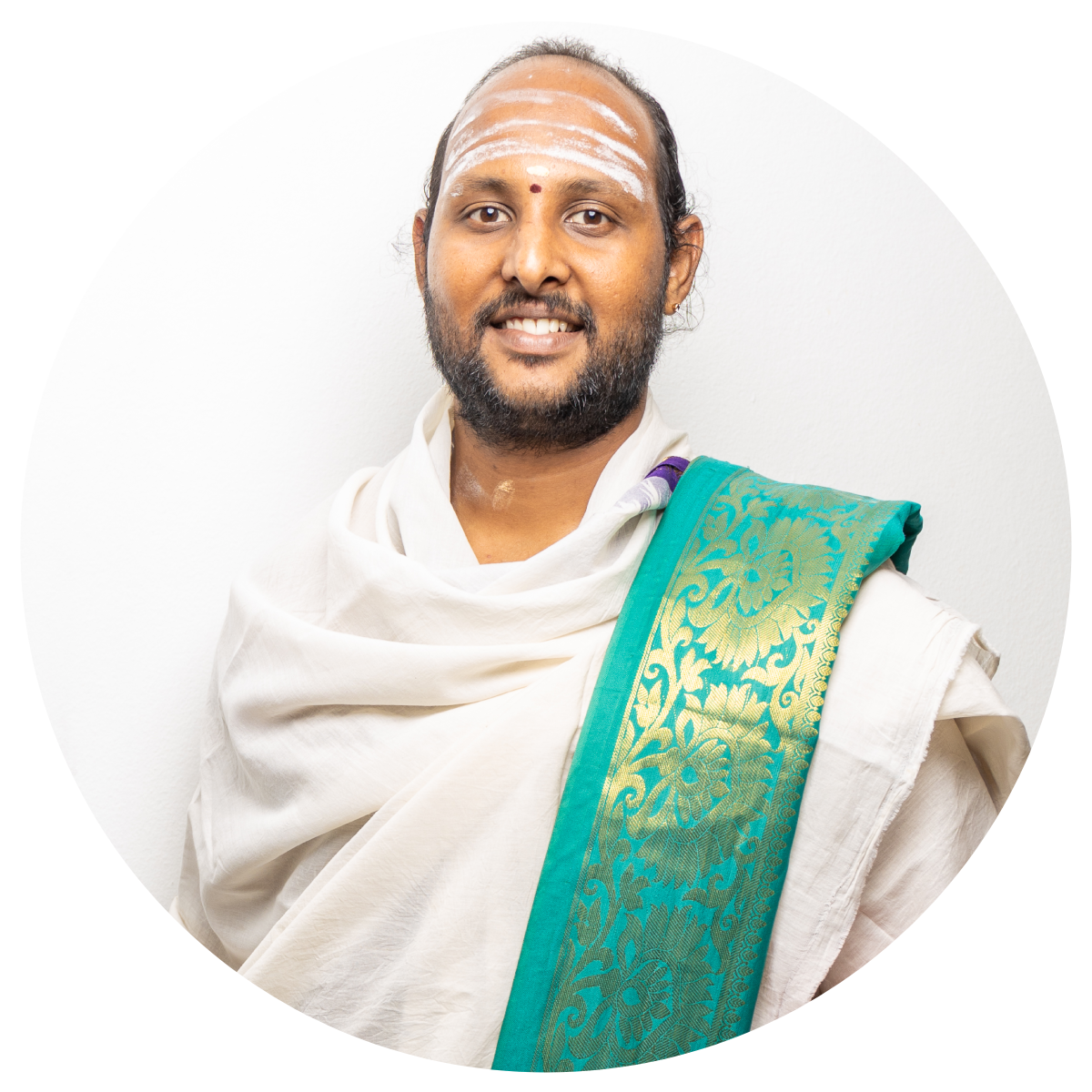
Sri Guru Vanchinathan Swaminathan